
When a food journal is kept diligently over twelve months, certain patterns become difficult to ignore. Not the dramatic swings of seasonal indulgence, but the quieter rhythms — the regularity with which certain food groups appear, the weeks when vegetables dominate the plate, the stretches when convenience pulls the day's eating toward processed alternatives. It is from these sustained observations that the most useful nutritional data emerges.
What the Daily Record Reveals
A food journal kept across a full calendar year offers something no single dietary snapshot can: temporal depth. The body's response to food is not immediate in the way popular accounts of weight suggest. A single day's eating — even a particularly nourishing or particularly indulgent one — rarely registers as a meaningful shift. What registers is the cumulative texture of a week's eating, then a month's, then a season's.
In the records reviewed for this article, the participants who maintained consistent dietary variety — rotating across vegetables, fruits, protein-rich whole foods, and adequate fibre — showed the most stable weight trajectories. Those whose records revealed prolonged periods of dietary monotony, where the same three or four food items dominated for weeks, showed more variable weight patterns regardless of total energy intake.
This is not a novel finding. Published nutritional research has noted for some time that dietary diversity indexes correlate with weight stability. What the personal record adds is granular texture: on which days does variety collapse? Under what scheduling pressures does processed food reliance increase? The journal makes these patterns visible in a way that aggregated data cannot.

Portion Awareness as a Documented Practice
One of the most consistent findings across the journals examined was the relationship between portion recording and portion awareness. When participants explicitly noted quantities — not as a prescribed calorie-counting exercise, but simply as descriptive documentation — they reported a greater awareness of what constituted a habitual serving versus an occasional excess.
This awareness does not automatically produce change, but it precedes it. The participants who adjusted their portion sizes did so after a period of observation, not before it. The record created a baseline against which they could compare their own patterns. Several noted that without the written record, their mental model of their typical portion sizes was significantly smaller than the documented reality.
Portion awareness, understood as a documented practice rather than a prescriptive rule, proved to be a durable habit. Those who sustained it across the year — not every day, but consistently enough to maintain a data-rich record — showed measurable shifts in their relationship with meal sizing over time.
The Role of Whole Foods in Weekly Rhythm
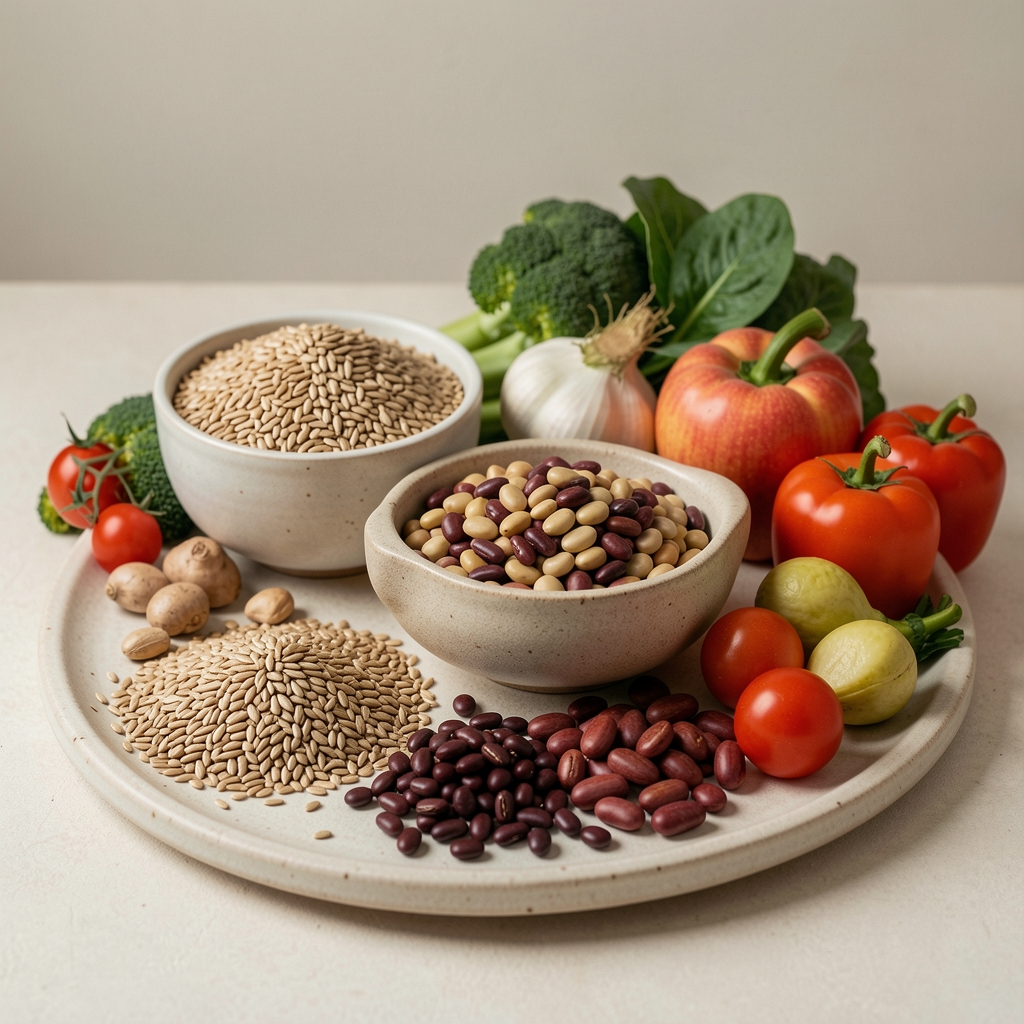
Participants who centred their weekly food rhythm on whole foods — vegetables, fruit, legumes, grains, fish, eggs, nuts — reported a different relationship with appetite and satiety than those whose weekly rhythm included a higher proportion of processed food staples. The former group described their hunger and fullness signals as more predictable. The latter more frequently reported erratic appetite patterns, eating past comfortable fullness, or skipping meals due to loss of appetite following a previous large meal.
This observation aligns with the nutritional understanding that dietary fibre, found primarily in whole plant foods, supports a sense of fullness between meals. Protein-rich whole foods — eggs, legumes, fish — contribute to a sense of satiety that tends to persist longer than the short-term satisfaction produced by refined carbohydrate-heavy options.
In practical terms, the journals showed a self-reinforcing rhythm: weeks anchored by whole foods tended to produce more structured meal patterns. Weeks that began with processed food staples tended to drift toward irregular meal timing and less consistent food choices across the remaining days. The week's rhythm, it appeared, was often set by its first two or three days.
Cooking from Scratch as Nutritional Data Collection
Home-cooked meals, in this context, function as a form of nutritional data collection. When a participant prepares a meal, they encounter every ingredient. They know the oil quantity. They observe the vegetable portions before and after cooking. They make decisions, even unconsciously, about balance and variety. This level of engagement with food components is absent when consuming prepared or restaurant meals.
This is not an argument for the moral superiority of home cooking, which carries its own set of class and time-based assumptions. It is an observation about information quality. Participants who cooked from scratch more frequently had richer, more descriptive food journals. Their records contained more detail about ingredient combinations, cooking methods, and the observed relationships between what they ate and how they felt in the hours following a meal.
This detail, accumulated over months, allowed patterns to emerge that participants themselves identified as informative. Several described a shift in their food selection at the point of shopping — choosing ingredients with more deliberation because they had accumulated enough personal data to understand which combinations left them satisfied and which left them searching for additional food within two hours.
Gradual Weight Change as an Observed Outcome
It is worth stating clearly what this record-keeping approach does and does not produce. It does not produce rapid weight change. None of the participants who maintained food journals for twelve months reported dramatic shifts in body weight across short periods. What several reported was a gradual, measurable shift across the full year — the kind of change that represents a sustainable recalibration of habits rather than a response to an imposed restriction.
The nutritional literature on gradual weight change is consistent on this point: changes that emerge from sustained shifts in dietary habits rather than acute restriction are more likely to persist. The journal-keeping methodology supports this precisely because it operates through awareness rather than enforcement. There is no prescribed calorie ceiling, no banned food list, no prescribed meal structure. There is only the record, and what the record reveals over time.
For the editorial team at Tornela Press, this observational methodology is the foundation of how weight and nutrition are discussed across these pages. The record precedes the interpretation. The pattern is described before any recommendation is made — and, even then, the recommendation takes the form of an observation about what tends to accompany the outcomes documented, not a directive about what the reader should do.
Closing Note on Methodology
The journals referenced in this article were kept voluntarily by individuals who shared records with the editorial team for the purpose of this documentation. Names and identifying details have been altered. The observations are presented as illustrative patterns, not as statistically representative data from a controlled study. Where findings align with published nutritional research, references are noted in the text. Where they diverge from or extend beyond published literature, that is stated explicitly.
Articles published on Tornela Press are editorial in nature and reflect the writers' observations on everyday nutrition practices and weight awareness. The content is not intended as professional advice, nor as guidance for the management of any specific condition. Readers with specific concerns about their daily routines are encouraged to speak with a qualified wellness professional.